
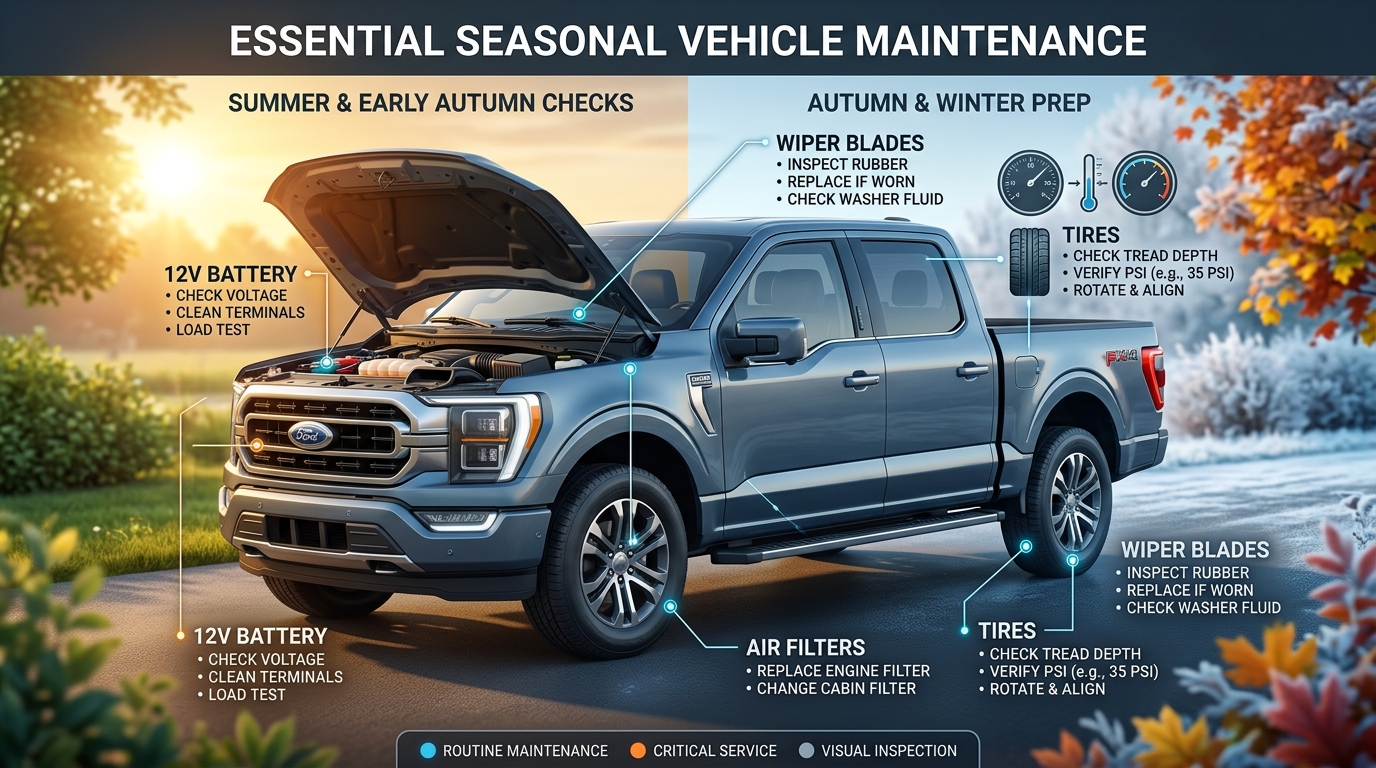
A Ford vehicle requires seasonal maintenance every six months or 7,500 miles to address system wear caused by temperature changes, road debris, and heavy driving loads. Core seasonal services include checking coolant concentration, inspecting battery health, testing tire tread and cold inflation pressure, replacing windshield wiper blades, and refreshing engine and cabin air filters. Performing these checks twice a year prevents thermal breakdown of vital fluids, protects mechanical components, and ensures reliable vehicle operation during extreme heat or sudden seasonal weather swings.
Changing weather patterns place distinct stresses on your vehicle's mechanical and electrical systems. High outdoor heat accelerates battery fluid evaporation and thins engine oil, while fluctuating temperatures cause tire pressures to shift and internal rubber belts to degrade. Routine mileage-based servicing addresses general mechanical friction, but seasonal car care focuses specifically on environmental demands. Checking fluid levels, electrical connections, and chassis components before severe weather sets in protects your engine, transmission, and braking system from unexpected strain.
For drivers navigating the agricultural roads and rolling terrain around Waynesboro, seasonal prep keeps work trucks and family SUVs performing efficiently under heavy towing or summer hauling conditions. Vehicles like the 2026 Ford F-150 4x4 featuring the 3.5L EcoBoost engine or the 2026 Ford Explorer equipped with the 2.3L EcoBoost require balanced cooling and proper fluid viscosity to manage high thermal loads. Inspecting these systems before seasonal travel ensures your vehicle maintains proper operating temperatures whether you are pulling a trailer or carrying a full cabin of passengers.
Maintaining clear visibility and optimal cabin comfort is equally critical as the seasons change. Ford guidelines recommend replacing wiper blades every six months and swapping the cabin air filter every 20,000 miles to clear out pollen, dust, and road grime. To stay ahead of seasonal wear, you can schedule your service appointment online with our certified technicians, give our service department (706) 554-2114 a call for maintenance advice, or visit our Waynesboro service center location for a comprehensive multi-point inspection.
Table of Contents
- What Is Ford’s Recommended Maintenance Schedule and How Does the Oil-Life Monitor Work?
- What Is the Difference Between Ford Summer Prep and Winter Prep Service Packages?
- Which Ford Seasonal Maintenance Tasks Are DIY Versus Professional Service?
- Common Questions About Ford Seasonal Service and Maintenance
- Keep Your Ford Running Strong with Expert Care in Waynesboro
What Is Ford’s Recommended Maintenance Schedule and How Does the Oil-Life Monitor Work?
Ford’s recommended maintenance schedule relies on 7,500-to-10,000-mile service intervals for standard synthetic blend oil changes, tire rotations, and multi-point inspections, supported continuously by the Ford Intelligent Oil-Life Monitor. This onboard system tracks engine operating conditions, temperature sensors, total load, and idling hours rather than relying on a fixed mileage counter, dynamically calculating when your oil begins to degrade and signaling when service is necessary.
Under normal driving conditions, the baseline maintenance framework follows predictable calendar and mileage thresholds:
- Every 7,500 to 10,000 miles: Change engine oil and filter, rotate tires, inspect brake pads and rotors, check cooling system fluid, and inspect steering linkages.
- Every 20,000 miles: Replace the cabin air filter to maintain interior heating and air conditioning airflow.
- Every 30,000 miles: Replace the engine air filter to preserve proper fuel economy and engine air intake.
- Every 3 years: Flush and replace hydraulic brake fluid to remove absorbed moisture and prevent pedal sponginess.
- At 6 years or 100,000 miles: Perform the initial engine coolant flush and replacement, repeating service every 3 years or 50,000 miles thereafter.
When a vehicle operates under severe service conditions—such as frequent trailer towing, commercial hauling, extensive idling, or driving in extreme ambient heat—the Intelligent Oil-Life Monitor adjusts its calculations automatically. Operating under heavy strain breaks down oil viscosity and accelerates additive depletion faster than standard highway cruising. Under these conditions, the system may prompt an oil change closer to a 3,000-to-5,000-mile window.
Adhering to these intervals preserves factory warranty coverage and extends overall powertrain longevity. Whether you manage an individual vehicle or maintain an entire fleet, using OEM-approved fluids like Motorcraft synthetic blend motor oil and Motorcraft Yellow Antifreeze keeps internal tolerances precise and alloy seals protected. If you perform routine filter changes or top off fluids at home, you can easily order genuine Ford parts directly through our specialized department.
What Is the Difference Between Ford Summer Prep and Winter Prep Service Packages?
Ford summer prep service packages focus primarily on air conditioning efficiency, engine cooling system boil-over protection, and heat-induced battery strain, whereas winter prep packages prioritize cold-cranking battery power, tire tread traction on wet roads, and anti-freezing washer fluid protection. Each service package targets the specific failure points caused by severe seasonal temperature extremes.
During a summer preparation check, technicians focus on components subject to high thermal loads:
- Air Conditioning Output: Measuring vent drop temperatures and verifying system pressure to ensure rapid cabin cooling.
- Cooling System Integrity: Testing radiator coolant concentration, inspecting serpentine belts for cracking, and verifying electric cooling fan operation.
- Battery Load Testing: Checking 12-volt battery cold-cranking amps and cleaning terminal buildup to prevent heat-accelerated plate corrosion.
- Tire Pressure and Tread: Verifying cold inflation pressures, as rising asphalt temperatures increase internal tire heat and blowout risks on underinflated tires.
In contrast, winter preparation adjusts fluid specifications and chassis components for cold, wet conditions. Technicians test coolant hydrometer levels to guarantee freeze protection down to -34 degrees Fahrenheit, verify that windshield washer fluid meets low-temperature non-freezing standards, and inspect chassis underbodies for protective coating integrity against road moisture.
Daily highway commuters traveling into Augusta benefit significantly from seasonal alignment and tire balance checks. Temperature drops cause tire pressures to fall by roughly 1 psi for every 10-degree drop in outside air, which compromises handling and increases tread wear if left unadjusted. Preparing your chassis and tires before seasonal shifts ensures predictable steering response and optimal stopping power year-round.
Which Ford Seasonal Maintenance Tasks Are DIY Versus Professional Service?
Basic Ford seasonal maintenance tasks such as inspecting tire tread depth, checking cold tire pressure, topping off windshield washer fluid, and visually inspecting wiper blades are straightforward DIY items, whereas battery load testing, coolant hydrometer analysis, brake system flushes, and air conditioning diagnostics require professional technician expertise and specialized shop tools.
Vehicle owners can easily manage routine vehicle checks at home between scheduled service visits:
- Checking Tire Inflation: Using a digital gauge to check cold tire pressure against the driver-side doorjamb placard once a month.
- Visual Wiper Blade Checks: Inspecting rubber edges for splitting, tearing, or streaking, and swapping blades every six months.
- Fluid Top-Offs: Replenishing washer fluid using seasonal formulas designed to clear bugs in summer or resist freezing in winter.
- Air Filter Replacement: Replacing the engine air filter and cabin air filter using basic hand tools when access housings are easily reachable.
More complex mechanical procedures belong in a certified service bay. Hydraulic brake fluid exchanges require pressure bleeding equipment to eliminate air pockets and moisture completely. Engine cooling system flushes require precise disposal procedures for old fluid and vacuum-refilling tools to eliminate air locks inside the engine block. Furthermore, modern Ford vehicles utilize complex electrical architectures where battery replacements require resetting the onboard Battery Management System using diagnostic equipment to prevent overcharging.
For unexpected roadside issues like flat tires, mechanical failures, or dead batteries during seasonal trips, Ford owners enjoy manufacturer-backed support through Ford Roadside Assistance: 1-800-241-3673, providing towing to authorized service centers and genuine OEM repair quality.
Common Questions About Ford Seasonal Service and Maintenance
Q: What happens if I drive on underinflated tires in hot summer weather?
A: Driving on underinflated tires in high summer temperatures causes excessive sidewall flexing, which rapidly generates dangerous internal heat. This heat buildup weakens the rubber layers and steel belts, significantly increasing the risk of tread separation or a sudden highway blowout while reducing overall fuel economy.
Q: How often should I have my Ford’s engine coolant flushed and replaced?
A: Ford recommends performing the initial engine coolant flush and replacement at 6 years or 100,000 miles under normal driving conditions. Following that initial service, the cooling system should be flushed and refilled every 3 years or 50,000 miles to maintain essential anti-corrosion and boil-over protection.
Q: Why does towing a trailer require shorter oil change intervals?
A: Towing heavy loads causes the engine to operate under higher RPMs and elevated operating temperatures. This extra thermal strain breaks down engine oil viscosity and depletes protective additives faster, requiring oil change intervals shortened to 3,000 to 5,000 miles under Ford severe-duty guidelines.
Q: Why should I get my 12-volt battery tested before hot weather travel?
A: Extreme summer heat accelerates internal battery plate corrosion and causes liquid electrolyte evaporation faster than winter cold does. A professional load test identifies internal resistance and dropping cold-cranking amps early, preventing a sudden battery failure when running heavy air conditioning loads.
Q: Can I use standard water to top off my engine cooling reservoir in an emergency?
A: You should only use distilled water temporarily in a true emergency, as plain tap water contains minerals that create internal engine scale and corrosion. As soon as possible, have a certified technician test and restore the proper 50/50 mixture of Motorcraft Yellow Antifreeze and distilled water to ensure proper boiling and freezing points.
Keep Your Ford Running Strong with Expert Care in Waynesboro
Staying proactive with your seasonal maintenance protects your mechanical investment, improves daily fuel efficiency, and guarantees vehicle safety across every season. From routine oil changes and tire rotations to complete cooling system flushes and battery load tests, following factory service schedules prevents unexpected mechanical issues on the road.
Our factory-trained technicians at Paul Thigpen Ford of Waynesboro provide transparent, certified care tailored specifically to your Ford truck, SUV, or car. We utilize specialized Ford diagnostic tools, OEM Motorcraft parts, and factory-approved service procedures to ensure your vehicle performs at its absolute best.
When you are ready to prepare your vehicle for upcoming seasonal weather or travel demands, our local team is here to assist you with flexible scheduling and expert advice. Stop by our dealership address on US-25 or give our service advisors a quick call at (706) 554-2114 to keep your Ford running strong mile after mile.