

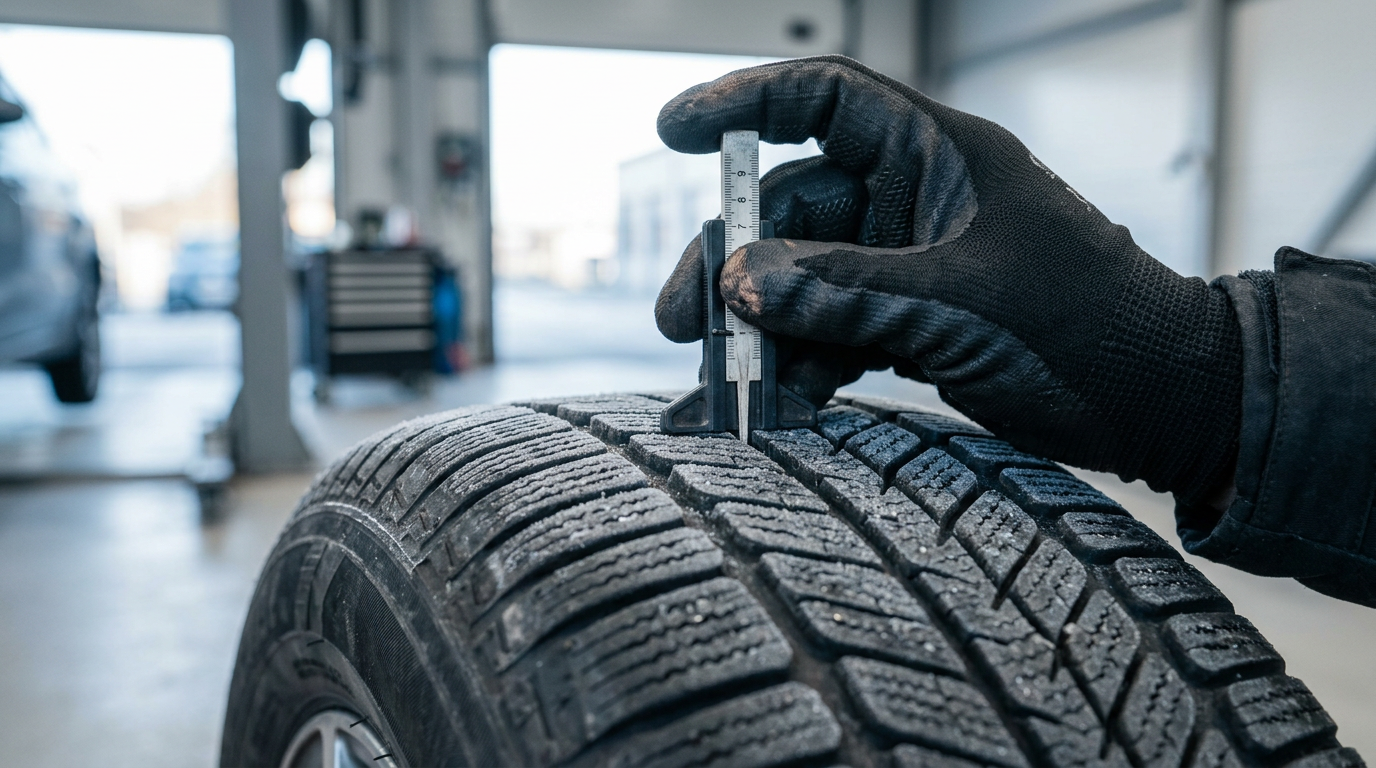
To prepare your vehicle for cold weather, inspect the battery, test system fluids, check tire pressure and tread depth, and verify that wiper blades and heating systems operate properly. Cold temperatures reduce chemical battery performance, lower tire pressure by roughly 1 to 2 PSI for every 10-degree drop in temperature, and thicken engine oil. Complete a seasonal multi-point inspection to prevent sudden starting failures and maintain safe handling throughout winter.
Preparing your vehicle before winter weather arrives prevents unexpected breakdowns during cold morning starts. Lower ambient temperatures put increased mechanical stress on every primary vehicle system, from electrical circuits to rubber components. Addressing essential maintenance items proactively ensures your vehicle remains dependable, safe, and efficient when operating in low temperatures.
A comprehensive cold weather preparation routine focuses on six key areas:
- Battery and Electrical System Inspection: Test Cold Cranking Amps and check terminals for oxidation or loose connections.
- Tire Inflation and Tread Evaluation: Adjust pressure to the specification printed on the driver-side doorjamb sticker and verify sufficient tread depth.
- Engine Oil and Fluid Checks: Confirm your engine uses the recommended low-viscosity motor oil and verify proper antifreeze concentration.
- Wiper Blade and Washer Fluid Service: Replace worn rubber blades and fill the reservoir with winter-grade washer fluid rated for sub-freezing temperatures.
- Brake System and Suspension Check: Inspect brake pads, rotors, and lines for wear and rust resistance.
- HVAC and Defroster Operation: Ensure the heater, cabin air filter, and front and rear defrosters function correctly.
Taking care of these items before temperature drops hit keeps your vehicle dependable for daily driving and rural commutes across farmland and rolling hills. If you need expert assistance preparing your truck or SUV for winter, visit our service center at 330 US in Waynesboro or give our service desk a quick call to consult with our factory-trained technicians.
Table of Contents
- How Does Cold Weather Affect Car Battery Performance and CCA?
- What Tire Pressure and Tire Types Are Best for Winter Driving?
- What Engine Oil Viscosity Rating Is Best Recommended for Cold Weather Driving?
- What Individual Maintenance Items Are Included in a Winter Car Checkup?
- Common Questions About Cold Weather Vehicle Care in Waynesboro
- Schedule Your Winter Maintenance Inspection at Paul Thigpen Ford
How Does Cold Weather Affect Car Battery Performance and CCA?
Cold weather drastically reduces a car battery's chemical efficiency while simultaneously increasing the energy required to turn over the engine. At freezing temperatures around 32°F, a conventional lead-acid or Absorbent Glass Mat (AGM) battery loses approximately 20 percent of its available starting capacity, and that loss can reach 40 to 50 percent near 0°F. Combined with engine oil thickening in lower temperatures, your vehicle's starter requires up to twice as much electrical amperage at the exact moment your battery has less power to give.
Cold Cranking Amps (CCA) is the standardized industry rating measuring how many amperes a 12-volt battery can deliver at 0°F for 30 seconds while maintaining a minimum voltage of 7.2 volts. Higher CCA ratings indicate greater cold-weather starting capability. Summer heat often causes internal plate degradation or sulfation that goes unnoticed during warm months; however, sudden temperature drops expose this hidden capacity loss, leading to slow cranking or a complete failure to start.
When evaluating battery health for cold weather, technicians perform a digital conductance load test rather than a simple surface voltage test. Conductance testing measures internal resistance and actual available CCA against factory specifications. Key signs that your vehicle battery is failing in cold weather include:
- A slow, sluggish engine crank when turning the ignition key or pressing the start button.
- Dimming interior lights or flickering dashboard displays during engine startup.
- Rapid clicking sounds coming from the starter solenoid.
- An illuminated battery or charging system warning light on the instrument cluster.
- Sluggish power window operation or delayed infotainment boot times.
Modern vehicles equipped with auto start-stop systems, high-draw electrical accessories, or large engine displacements—such as the 3.5L engine on the 2026 Ford F-150—require robust electrical reserve capacity. Replacing an aging battery before cold snaps occur protects starter motors and alternators from electrical strain. You can order OEM Ford replacement parts directly through our department to ensure your vehicle gets a battery built to factory specifications.
What Tire Pressure and Tire Types Are Best for Winter Driving?
The recommended tire pressure setting for winter driving is the exact cold inflation pressure specified on your vehicle's driver-side doorjamb placard, rather than the maximum pressure listed on the tire sidewall. Ambient temperature changes directly impact tire pressure, causing tires to lose roughly 1 to 2 PSI for every 10°F drop in outdoor temperature. Never intentionally overinflate or underinflate your tires for winter, as proper inflation ensures the intended contact patch for traction, steering stability, and even tread wear.
Maintaining proper tire pressure during cold months requires regular monitoring with an accurate digital gauge. Check pressure first thing in the morning when tires are cold, before the vehicle has been driven. Underinflated tires experience accelerated wear along the outer tread shoulders, reduced fuel efficiency, and increased risk of rim damage when striking potholes, while overinflated tires reduce center tread traction on slippery roads.
Understanding tire rubber dynamics helps clarify the difference between tire categories:
- All-Season Tires: Engineered with tread compounds that deliver balanced wear and traction in mild temperatures, but the rubber compound hardens below 45°F, reducing grip on cold asphalt.
- Winter Tires: Manufactured with specialized flexible silica compounds and high-density sipes that remain soft in freezing temperatures, providing superior biting edges on ice and packed snow.
- All-Weather Tires: Feature intermediate rubber compounds and severe-snow-service ratings, offering improved cold-weather flexibility without requiring bi-annual seasonal tire swaps.
Drivers who commute along the Savannah River corridor into Augusta benefit significantly from checking tire pressures weekly during seasonal temperature drops. For all-wheel-drive vehicles like the 2026 Ford Escape with its available All-wheel drive or the 2026 Ford Explorer with its available Four-wheel drive, consistent tire inflation across all four positions is essential to prevent unnecessary stress on the transfer case and electronic torque-vectoring systems.
What Engine Oil Viscosity Rating Is Best Recommended for Cold Weather Driving?
The best engine oil viscosity rating for cold weather driving is the lowest winter-rated multi-grade synthetic oil approved by your vehicle manufacturer, typically 0W-20, 5W-20, or 5W-30. The number preceding the "W" (which stands for Winter) indicates how easily the oil flows at freezing temperatures. A lower winter rating, such as 0W or 5W, flows significantly faster during initial startup than a heavier 10W or 15W oil, ensuring critical engine components receive instant lubrication.
Engine wear occurs most heavily during cold startups, when dry metallic components rub together before oil pressure builds. As ambient temperatures drop, motor oil naturally thickens, increasing internal fluid drag and making the crankshaft harder to rotate. Using a full synthetic oil formulated with a low winter viscosity index provides several immediate benefits:
- Reduced starter motor load and battery power strain during freezing morning ignition.
- Rapid oil pressure buildup to overhead camshafts, turbocharger bearings, and hydraulic valve lifters.
- Enhanced fuel economy by minimizing internal parasitic engine drag during warm-up cycles.
- Superior thermal stability that prevents oil breakdown under severe load or high operating temperatures.
Consulting your owner's manual ensures you select the correct viscosity grade for your engine configuration. For example, high-output powertrains like the 300 hp 2.3L engine in the 2026 Ford Explorer or the 400 hp 3.5L V6 in the 2026 Ford F-150 rely on precise oil viscosity to operate electronic variable camshaft timing and turbocharger cooling circuits efficiently during cold weather.
What Individual Maintenance Items Are Included in a Winter Car Checkup?
A winter car checkup includes a comprehensive inspection of a vehicle's mechanical, electrical, safety, and climate systems to prepare for cold operating conditions. Servicing these components together ensures that cold weather does not compromise reliability or driving safety. Technicians systematically inspect each system to identify worn components before they lead to starting issues or highway breakdowns.
Individual items evaluated during a seasonal winter maintenance checkup include:
- Antreeze and Cooling System Test: Testing coolant freeze-point protection using a refractometer, inspecting radiator hoses for cracks or softness, and checking radiator cap seal integrity.
- Battery Health and Charging Output: Conducting a conductance test for available Cold Cranking Amps, inspecting cable terminals for oxidation, and verifying alternator charging voltage.
- Brake System Inspection: Measuring brake pad friction material thickness, inspecting rotors for rust or pitting, and testing brake fluid moisture content to prevent cold pedal fade.
- Tire Condition and Alignment Check: Inspecting tread depth, evaluating uneven wear patterns, checking spare tire pressure, and adjusting cold inflation pressure across all positions.
- Wiper Blades and Washer System: Replacing streaking windshield wipers with winter beam-style blades, verifying washer pump operation, and filling fluid reservoirs with freeze-resistant washer fluid.
- Belts, Hoses, and Drive System: Checking serpentine drive belts for wear or tension loss and verifying operational readiness of heating and defrosting controls.
Drivers bringing their truck or SUV in for winter service often ask if all-season tires and standard drive modes are sufficient for seasonal morning freezes. Vehicles engineered with advanced drive management—such as the 2026 Ford F-150 with its selectable Slippery and available Deep Snow/Sand modes—rely on fully functioning braking and powertrain systems to modulate wheel torque on slick road surfaces effectively.
Common Questions About Cold Weather Vehicle Care in Waynesboro
Q: Does AWD help a car stop faster on icy winter roads?
No, All-Wheel Drive (AWD) and Four-Wheel Drive (4WD) do not help a car stop faster on icy or slippery roads. AWD and 4WD systems only assist with vehicle acceleration and forward traction by distributing engine power to all four wheels. Braking distance and cornering grip on ice depend entirely on the traction provided by your tires, your vehicle's anti-lock braking system (ABS), and proper vehicle speed management for road conditions.
Q: How often should I check my tire pressure during cold weather?
Tire pressure should be checked at least once every two weeks during winter, as well as whenever outdoor temperatures drop significantly. Because tire pressure decreases by roughly 1 to 2 PSI for every 10°F drop in temperature, sudden cold fronts can leave your tires severely underinflated. Always measure tire pressure when the tires are cold—before the vehicle has been driven—using a reliable digital tire pressure gauge.
Q: Why does my engine crank more slowly on cold mornings?
An engine cranks more slowly on cold mornings due to a combination of reduced battery chemical output and thickened engine oil. Cold temperatures slow the electrochemistry inside lead-acid and AGM batteries, reducing available Cold Cranking Amps. At the same time, cold motor oil increases mechanical resistance inside the engine, requiring the starter motor to draw substantially more electrical current from a battery that is already operating at reduced capacity.
Q: Is synthetic oil better than conventional oil for winter driving?
Yes, full synthetic motor oil performs significantly better than conventional oil in cold weather. Synthetic oil is engineered to resist thickening in sub-freezing temperatures, allowing it to flow quickly to critical engine parts during startup. This fast oil circulation reduces starter strain, minimizes engine wear during cold starts, and helps protect turbochargers and valvetrain components when temperatures drop.
Q: What should I do if my battery terminals have white or green buildup?
White or green powdery buildup on battery terminals is corrosion caused by hydrogen gas venting and moisture reacting with lead and copper connectors. This corrosion increases electrical resistance, preventing the alternator from fully charging the battery and restricting power sent to the starter. Clean the terminals using a specialized neutralizing solution or baking soda wash, brush away deposits, tighten connections, and apply an anti-corrosion spray.
Schedule Your Winter Maintenance Inspection at Paul Thigpen Ford
Protecting your vehicle against cold weather starts with proactive maintenance handled by qualified service professionals. Whether you need a digital battery load test, a seasonal oil change with winter-grade synthetic lubricant, or a comprehensive multi-point winter safety checkup, our factory-trained service team is ready to help keep your vehicle running reliably all season long.
Regular vehicle inspections protect your automotive investment and prevent unexpected cold-weather starting failures. You can drop by our service department at 330 US in Waynesboro, give our service advisors a quick call, or easily book a service appointment online at your convenience.