


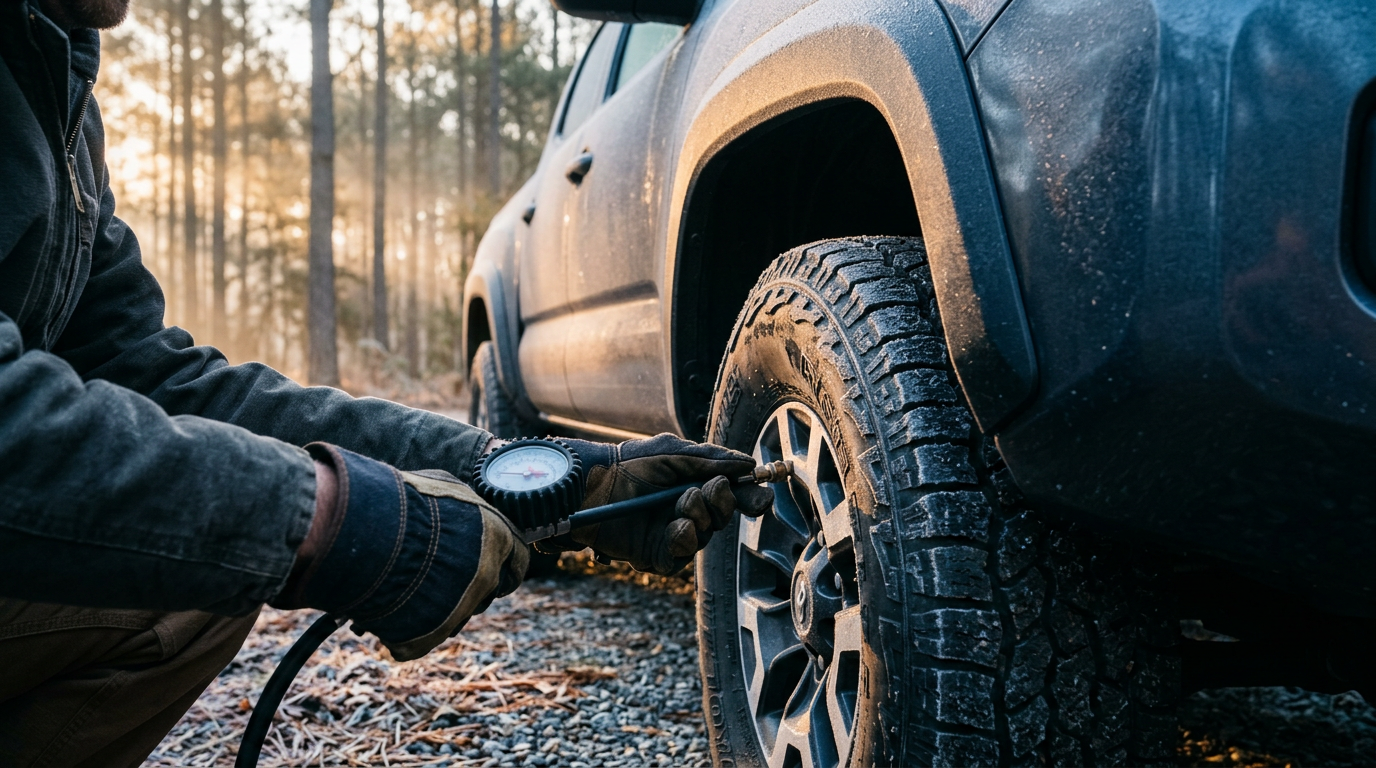
To prepare a truck for winter in Georgia, focus on battery testing, cooling system balance, tire pressure management, and wiper fluid protection. Mild Southern freezes still place thermal stress on 12-volt batteries and drop tire pressures by roughly 1 PSI for every 10-degree dip in temperature. Verifying a 50/50 antifreeze concentration, topping off winter-rated washer fluid, and inspecting tire tread ensures dependable starting and traction on damp, frosty roads.
While Southern winters rarely bring prolonged blizzards, overnight drops below freezing are common. Dust, mud, and humidity from local routes can accelerate component wear if routine care is deferred. A comprehensive seasonal inspection helps prevent unexpected mechanical issues during early morning starts or heavy hauling tasks.
When preparing an F-Series truck or a midsize 2026 Ford Ranger equipped with a 2.3L engine and SelectShift® automatic transmission, checking basic maintenance points keeps engine systems operating at peak efficiency. Our service team at our dealership showroom and service center provides complete multi-point inspections to confirm your vehicle is fully prepped. If you have questions about seasonal maintenance intervals, give our service department a quick call.
Table of Contents
- What Maintenance Checks Should Waynesboro Truck Owners Perform Before Winter?
- Why Is Battery Health the Most Critical Winter Maintenance Step in Cold Temperatures?
- What Antifreeze Ratio and Engine Fluids Preserve Truck Performance in Southern Winters?
- How Much Tire Pressure Do Truck Tires Lose for Every 10-Degree Temperature Drop?
- Why Do Diesel Trucks Require Extra Cold-Weather Maintenance Compared to Gas Trucks?
- Do Georgia Truck Owners Need Winter-Grade Fuel or Tire Chains for Local Driving?
- Common Questions About Winter Truck Care in Georgia
- Keeping Your Ford Truck Ready for Every Georgia Season
What Maintenance Checks Should Waynesboro Truck Owners Perform Before Winter?
Before winter arrives, truck owners should check battery cold-cranking capacity, coolant freeze protection, tire pressure and tread depth, brake pad thickness, and wiper blade integrity. These core inspections protect vital engine components, preserve braking performance, and ensure clear visibility during sudden cold rain or morning frost.
Navigating unpaved country roads and local farm routes around Waynesboro exposes chassis components to heavy dirt and grime. Over time, rubber boots, suspension bushings, and steering linkages can wear or accumulate buildup. Washing the underbody and inspecting protective boots prevents road debris from compromising mechanical joints.
A standard seasonal checkup should also evaluate engine oil life and cabin air filtration. Modern trucks equipped with the Ford Intelligent Oil-Life Monitor adjust maintenance intervals dynamically based on ambient temperatures and idling time. Short cold-weather commutes prevent the engine from reaching full operating temperature, allowing moisture to collect in the crankcase and shortening oil life. You can easily book a service appointment online to have our factory-trained technicians inspect your truck, or order genuine Motorcraft parts directly through our service center for home maintenance.
Why Is Battery Health the Most Critical Winter Maintenance Step in Cold Temperatures?
Battery health is the most critical winter maintenance step because cold temperatures reduce chemical reaction speeds inside lead-acid and Absorbed Glass Mat ( AGM) batteries, cutting available cranking power by roughly 20 percent at 32 degrees Fahrenheit. At the same time, cold motor oil increases engine resistance, requiring significantly more energy from the battery to start the truck.
Summer heat frequently degrades internal battery plates, evaporating electrolyte solution in traditional flooded batteries and accelerating grid corrosion. While this damage occurs during hot months, it remains hidden until the first freeze demands maximum power output. When ambient temperatures plunge overnight, a heat-weakened battery often fails without warning.
Key symptoms of a declining truck battery include:
- Slower engine cranking speeds during initial startup
- Dimming headlights or digital instrument cluster lights while idling
- Inactive auto start-stop features
- Visible corrosion or buildup around terminal posts and cables
Testing cold-cranking capacity with a conductance tester measures reserve strength before cold weather hits. Replacing a weak battery prevents frustrating morning delays and protects sensitive onboard electronic systems from sudden voltage drops.
What Antifreeze Ratio and Engine Fluids Preserve Truck Performance in Southern Winters?
A 50/50 ratio blend of engine antifreeze and distilled water provides the ideal thermal balance for Southern winters, offering freeze protection down to sub-zero temperatures while maintaining optimal heat dissipation during milder days. Using pre-mixed Motorcraft Yellow Antifreeze/Coolant protects aluminum engine blocks and radiator components against internal corrosion and cavitation.
Maintaining proper fluid viscosity across all vehicle systems is equally important when temperatures drop. Engine oil must flow quickly upon startup to coat upper valve trains and turbocharger bearings. A 2026 Ford F-150 powered by the 3.5L engine relies on synthetic blend motor oil, such as 5W-30 or 5W-20, to deliver rapid lubrication during cold cranks.
In addition to engine coolant and motor oil, truck owners should review other vital fluids:
- Windshield washer fluid formulated for low temperatures to prevent reservoir cracking and line freezing
- Brake fluid inspection to confirm no moisture contamination has lowered its boiling point
- Differential and transfer case fluid checks on four-wheel-drive models to ensure proper gear lubrication
Routine fluid maintenance protects precision internal tolerances and ensures consistent performance whether hauling heavy loads or idling on job sites.
How Much Tire Pressure Do Truck Tires Lose for Every 10-Degree Temperature Drop?
Truck tires lose approximately 1 PSI of air pressure for every 10-degree Fahrenheit drop in ambient outdoor temperature. A sudden 30-degree freeze can cause a 3 PSI drop, which reduces fuel efficiency, increases shoulder tread wear, and compromises handling.
Maintaining correct tire pressure is vital for safety and tread longevity, especially when carrying heavy cargo or towing trailers rated up to 7,500 lbs on a 2026 Ford Ranger. Underinflated tires flex excessively, generating internal heat that damages casing structure over time. Furthermore, soft tread blocks reduce steering responsiveness on wet highway surfaces.
To maintain proper inflation throughout changing weather:
- Check tire pressures monthly when tires are cold, meaning the vehicle has been parked for at least three hours
- Inflate tires to the cold tire pressure listed on the driver-side door jamb placard, not the maximum PSI stamped on the tire sidewall
- Inspect tread depth using a gauge to ensure adequate rubber remains for wet-weather traction
- Rotate tires at every oil change interval to maintain even wear patterns across all four positions
Drivers commuting along the Savannah River parkways in Augusta during damp winter mornings benefit from consistent pressure checks, ensuring maximum surface contact and stability on wet asphalt.
Why Do Diesel Trucks Require Extra Cold-Weather Maintenance Compared to Gas Trucks?
Diesel trucks require extra cold-weather maintenance because diesel fuel contains naturally occurring paraffin wax that can gel in cold temperatures, clogging fuel filters and starving the engine. Additionally, heavy-duty diesel engines require dual-battery systems and specialized water separators that demand additional seasonal service.
When outdoor temperatures fall toward freezing, the wax in untreated diesel fuel begins to crystallize, forming a cloudy mixture that blocks fuel lines and injectors. Servicing the fuel-water separator removes accumulated condensation, preventing trapped water from freezing and damaging high-pressure fuel pumps.
Essential cold-weather steps for diesel truck care include:
- Adding anti-gel fuel additives before cold snaps to prevent paraffin crystallization
- Draining the fuel-water separator monthly to prevent ice formation in the fuel bowl
- Testing both batteries in dual-battery configurations, as a failure in one battery drags down the entire 12-volt electrical system
- Inspecting engine block heater cords and elements to ensure reliable operation during hard freezes
Proactive fuel system maintenance ensures heavy-duty trucks start reliably and deliver full torque without unexpected fuel starvation issues on cold mornings.
Do Georgia Truck Owners Need Winter-Grade Fuel or Tire Chains for Local Driving?
Georgia truck owners generally do not need winter-grade arctic fuel blends or tire chains for local driving. Standard gas and diesel blends supplied at regional service stations combined with quality all-season or all-terrain tires provide ample traction and performance for typical Southern winter weather.
While heavy tire chains and specialized winter tires are necessary in mountainous snow belts, standard all-season tires maintain adequate grip on damp Georgia roads when properly inflated. Regional fuel suppliers automatically adjust fuel volatility blends during cooler months to aid cold starts without requiring specialty additives for gasoline engines.
However, preparing for unexpected winter weather remains practical. Keeping a basic winter emergency kit in your truck cab ensures peace of mind during seasonal weather shifts. Recommended items include a heavy-duty ice scraper, a flashlight, jumper cables, tow straps, and extra winter-rated washer fluid.
For comprehensive seasonal multi-point inspections, visit our Waynesboro service location or contact our team directly by calling (706) 554-2114 to discuss your maintenance needs.
Common Questions About Winter Truck Care in Georgia
Q: Is professional winter maintenance cost-effective compared to potential repairs?
Investing in preventive seasonal maintenance is significantly more cost-effective than paying for emergency repairs caused by cold weather. Routine checks on coolant, batteries, and tires typically cost a fraction of the expense required to replace a frozen engine block, cracked radiator, or damaged fuel pump resulting from neglected fluids.
Q: How often should truck batteries be tested in Georgia?
Truck batteries older than three years should be tested at least once a year in late autumn before night freezes begin. Regular conductance testing identifies declining reserve capacity early, allowing truck owners to replace aging batteries before experiencing sudden startup failure.
Q: What is the recommended coolant mixture for southern winters?
A 50/50 ratio mixture of approved antifreeze and distilled water is recommended for Southern winters. This ratio protects engine components against freezing down to sub-zero temperatures while preserving effective heat transfer during warmer afternoon drives.
Q: How does cold weather affect fuel economy in pickup trucks?
Cold weather slightly reduces fuel economy due to increased engine friction from cold oil, longer warm-up times, and lower tire pressures. Maintaining proper tire inflation and avoiding excessive idle times helps minimize seasonal drops in fuel efficiency.
Q: Can cold weather damage a truck windshield washer system?
Using plain water or summer washer fluid in cold weather can cause liquid in the washer reservoir and supply hoses to freeze and expand. This expansion can crack the plastic reservoir tank, ruin the pump motor, or split supply lines. Using low-temperature winter washer fluid prevents freeze damage.
Keeping Your Ford Truck Ready for Every Georgia Season
Proper seasonal care protects your vehicle investment, maintains factory towing and hauling capabilities, and ensures safe daily driving regardless of sudden temperature drops. From battery load testing and fluid ratio checks to tire inspections, addressing basic maintenance before cold weather hits prevents costly downtime.
Our certified technicians at Paul Thigpen Ford of Waynesboro are dedicated to delivering thorough, transparent service for all Ford truck models. Whether you drive a daily commuter truck or rely on a heavy-duty workhorse, our team provides the expert care needed to keep your vehicle running smoothly year-round.
Check your maintenance schedule, check your tire pressures, and schedule your winter service appointment online today to keep your Ford truck performing at its best through every season.