

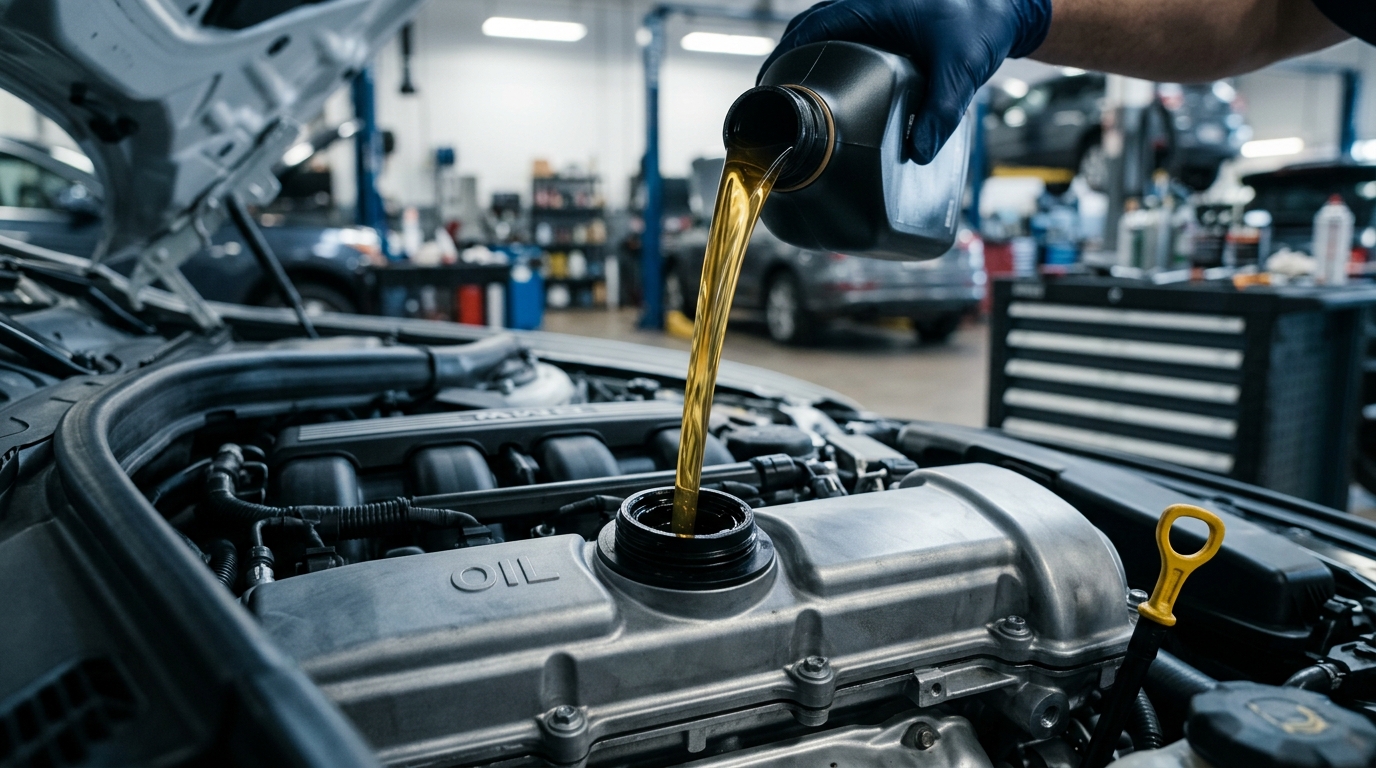
Under normal operating conditions, a modern Ford gasoline vehicle can travel up to 10,000 miles or 1 year between oil changes, whichever comes first. Most late-model Ford engines trigger the Intelligent Oil-Life Monitor between 7,500 miles and 10,000 miles, while severe driving conditions require oil changes every 5,000 miles or 6 months.
The exact distance a vehicle can safely go between oil services depends heavily on engine design, oil formulation, and driving habits. Modern Ford powertrains utilize advanced sensor networks and computer algorithms through the Intelligent Oil-Life Monitor (IOLM) to track operating conditions. Rather than relying solely on a fixed odometer reading, the system evaluates engine temperatures, ambient weather, idling hours, vehicle speed, and towing loads to calculate oil breakdown in real time.
When operating under ideal conditions—such as steady highway cruising with light cargo—the oil life algorithm permits intervals reaching the maximum 10,000-mile threshold. However, vehicles subjected to frequent short trips, prolonged idling, or off-road operation will see the service indicator illuminate much sooner. Driving across rural farm routes and unpaved roads around Waynesboro exposes the air intake and crankcase to elevated dust levels, which accelerates fluid contamination and shortens service life toward the 5,000-mile mark.
Exceeding the 10,000-mile or 1-year limit is strongly discouraged by factory engineers, even if the dashboard monitor has not yet signaled a required service. Over time, motor oil suffers thermal degradation, loses viscosity, and depletes its protective additive package. Depleted oil can no longer suspend soot or prevent sludge accumulation, leading to increased friction across camshafts and cylinder walls. Our team at our Waynesboro service center can inspect your current oil life percentage and perform a quick drain and refill; feel free to give our service desk a quick call to verify your recommended maintenance interval.
Table of Contents
- What Engine Oil Viscosity Does Ford Require for EcoBoost and V8 Engines?
- What Services Are Performed at Ford 10,000-Mile and 30,000-Mile Maintenance Milestones?
- How Does Heavy Towing Impact the Maintenance Schedule of a Ford F-150?
- How Do Factory Maintenance Schedules Compare to Dealer-Recommended Fluid Service Intervals?
- How Long Do OEM Brake Pads and Rotors Typically Last on a Ford F-150?
- What Coverage Is Included in the Ford Protect Premium Maintenance Plan?
- Frequently Asked Maintenance Questions for Ford Owners
- Schedule Certified Ford Maintenance in Waynesboro
What Engine Oil Viscosity Does Ford Require for EcoBoost and V8 Engines?
Ford specifies SAE 5W-30 synthetic blend motor oil meeting specification WSS-M2C961-A1 for most EcoBoost turbocharged engines, whereas naturally aspirated V8 engines typically require SAE 5W-20 motor oil meeting specification WSS-M2C960-A1.
The direct-injected EcoBoost engine family places distinct mechanical demands on internal lubricants. Turbochargers rely on a continuous flow of pressurized motor oil to lubricate and cool shaft bearings that rotate at speeds exceeding 100,000 rpm. A 3.5L EcoBoost V6 producing 400 hp and 500 lb-ft of torque generates significant cylinder pressures and localized heat. Using the factory-recommended SAE 5W-30 formulation ensures adequate film strength at elevated temperatures while preventing low-speed pre-ignition (LSPI), a destructive premature combustion event that can damage pistons and connecting rods.
Naturally aspirated engines, such as the Ford 5.0L V8, utilize SAE 5W-20 viscosity oil to balance internal engine protection with reduced hydraulic drag. The lighter viscosity flows rapidly during cold morning starts, instantly lubricating variable camshaft timing (VCT) phasers and hydraulic roller finger followers.
Deviating from the engine-specific viscosity listed in your vehicle manual can cause serious mechanical issues. Installing an unapproved, higher-viscosity oil can restrict flow through narrow oil galleries, delay VCT actuator responses, and trigger check engine lights. Conversely, using an under-spec thin oil in a turbocharged engine risks oil film shear under heavy load. Motorcraft synthetic blend and full synthetic motor oils are formulated specifically with anti-wear additives and detergents tailored to Ford metallurgies.
What Services Are Performed at Ford 10,000-Mile and 30,000-Mile Maintenance Milestones?
The Ford 10,000-mile maintenance milestone focuses on routine engine care, tire preservation, and system safety checks, while the 30,000-mile service adds comprehensive air filtration replacements and detailed mechanical inspections across the chassis and fuel lines.
During the initial 10,000-mile service appointment, technicians complete foundational preventive care items designed to keep the powertrain running efficiently:
- Replacing engine oil with fresh Motorcraft synthetic blend or full synthetic oil and installing a genuine Motorcraft oil filter.
- Rotating all four tires to ensure even tread wear across front and rear axles, while adjusting tire pressures to factory door-jamb specifications.
- Inspecting the entire brake system, including measuring brake pad friction material thickness, rotor surface condition, and hydraulic lines.
- Testing battery terminal connections, cold-cranking amps, and charging system output.
- Performing a comprehensive multi-point inspection to evaluate fluid levels, steering components, drive belts, and exhaust shields.
When a vehicle reaches 30,000 miles, the service scope expands significantly to protect internal engine components and cabin air quality. In addition to repeating all core 10,000-mile maintenance steps, technicians perform key replacement services:
- Replacing the engine air filter to maintain unrestricted airflow into the intake manifold, preserving fuel economy and engine responsiveness.
- Installing a new cabin air filter to clear dust, pollen, and debris from entering the heating and air conditioning ventilation system.
- Inspecting the fuel tank, vapor lines, fuel filler pipe, and evaporative emission control system for tight seals and proper pressure retention.
- Inspecting four-wheel-drive transfer case fluid levels, front and rear axle gear oils, and steering linkage ball joints for wear or boot tears.
Keeping up with these mileage milestones prevents minor component wear from escalating into mechanical breakdowns. Owners can streamline their vehicle care by scheduling a maintenance visit online at the recommended interval.
How Does Heavy Towing Impact the Maintenance Schedule of a Ford F-150?
Heavy towing subjects a Ford F-150 to elevated operating temperatures and severe mechanical strain, requiring owners to transition from standard maintenance intervals to the Ford severe-duty service schedule.
Pulling trailers, hauling equipment, or carrying heavy payloads forces the engine, transmission, and driveline to operate near maximum capacity for extended periods. A 2026 Ford F-150 equipped with the 3.5L EcoBoost V6 delivers a maximum towing capacity of 10,400 lbs and a payload rating up to 1,945 lbs. Operating continuously near these maximum thresholds generates extreme thermal energy inside internal gearboxes and hydraulic circuits.
Under severe towing conditions, key maintenance intervals are adjusted to prevent thermal fluid breakdown and premature wear:
- Engine Oil and Filter: The oil change interval drops from 7,500–10,000 miles down to every 5,000 miles or 6 months due to increased fuel dilution and thermal shear.
- Automatic Transmission Fluid: Transmissions utilizing Motorcraft MERCON ULV fluid in the 10R80 10-speed automatic transmission require fluid and filter changes at 60,000 miles rather than the standard 100,000-to-150,000-mile timeline. High fluid temperatures accelerate oxidation, leading to harsh gear shifts and clutch slippage if neglected.
- Differential Gear Oil: Axle fluids formulated with synthetic SAE 75W-85 or 75W-140 gear oil must be inspected frequently and replaced every 30,000 miles to 60,000 miles when routinely towing heavy loads. Extreme ring-and-pinion friction causes thermal degradation of gear oil additives.
- Brake System Care: Trailer towing places heavy demands on truck braking systems, accelerating wear on friction pads and heat-checking on brake rotors.
How Do Factory Maintenance Schedules Compare to Dealer-Recommended Fluid Service Intervals?
Factory maintenance schedules establish baseline maximum service thresholds for ideal operating conditions, whereas dealer-recommended fluid service intervals adjust these timelines to account for real-world environmental stress, stop-and-go driving, and regional climate factors.
Automaker owner's manuals outline factory schedules assuming steady-state driving on clean highways. Dealer service recommendations reflect operational data gathered from thousands of real-world vehicles operating in demanding daily environments. For example, drivers commuting through heavy urban stop-and-go traffic along the Savannah River basin near Augusta subject their vehicles to frequent engine idling and high thermal cycling, conditions that rapidly deplete fluid additives.
| Vehicle Fluid | Factory Baseline Schedule | Severe / Dealer-Recommended Schedule | Primary Service Reason |
|---|---|---|---|
| Engine Oil & Filter | Up to 10,000 miles / 1 year | 5,000 miles / 6 months | Prevents thermal breakdown and soot accumulation |
| Brake Fluid | Every 3 years | Every 3 years or 30,000 miles | Flushes absorbed moisture to prevent internal corrosion |
| Engine Coolant | First flush at 100,000 miles | Test at 30,000 miles; exchange at 60,000–100,000 miles | Preserves anti-corrosion pH balance in aluminum blocks |
| Automatic Transmission Fluid | 100,000 miles to 150,000 miles | 60,000 miles | Maintains hydraulic pressure and protects clutch packs |
| Differential & Transfer Case | 100,000 miles | 30,000 miles to 60,000 miles | Removes metal wear particles and protects gear mesh |
Brake fluid absorbs ambient humidity through microscopic pores in rubber hydraulic hoses over time. Replacing DOT 4 Low Viscosity Brake Fluid every 3 years prevents internal master cylinder pitting and maintains a firm brake pedal. Similarly, Motorcraft Yellow Antifreeze/Coolant maintains silicate and organic acid technology balance to shield radiator cores from internal corrosion when tested regularly.
How Long Do OEM Brake Pads and Rotors Typically Last on a Ford F-150?
Original equipment manufacturer (OEM) brake pads on a Ford F-150 typically last between 30,000 miles and 70,000 miles, while OEM brake rotors generally last between 50,000 miles and 70,000 miles.
Brake component lifespan varies widely based on vehicle payload, towing frequency, driving terrain, and driver braking habits. An F-150 used primarily for unloaded highway commuting will reach the upper end of pad and rotor longevity. Conversely, trucks carrying heavy bed payloads or frequently descending steep grades under trailer load generate intense friction heat that accelerates friction pad wear toward the lower 30,000-mile threshold.
Signs that an F-150 requires brake maintenance include:
- High-pitched squealing noises caused by built-in mechanical wear indicators contacting the rotor surface.
- Steering wheel pulsation or brake pedal vibration during high-speed deceleration, signaling uneven rotor surface wear or thermal warping.
- Increased brake pedal travel or a spongy pedal feel caused by air or moisture in hydraulic brake lines.
- Visual inspection showing brake pad friction material worn down to 3/32 of an inch or less.
Replacing worn components with factory Motorcraft brake pads and rotors ensures exact fitment and original stopping performance. Motorcraft friction formulations are engineered to match factory caliper pressure specs, reducing dust accumulation and preventing brake squeal. Truck owners can restore factory stopping power by ordering factory Motorcraft parts designed specifically for their vehicle's gross vehicle weight rating.
What Coverage Is Included in the Ford Protect Premium Maintenance Plan?
The Ford Protect Premium Maintenance Plan is an extended service option that covers all standard factory-scheduled maintenance services along with essential wear-and-tear components that are typically excluded from standard warranties.
Unlike standard factory warranty coverage—such as the 3-year/36,000-mile bumper-to-bumper warranty or the 5-year/60,000-mile powertrain warranty—which protects against unexpected mechanical defects, the Premium Maintenance Plan covers ongoing operational care. It locks in routine service costs, shielding vehicle owners from rising parts and labor prices over the life of the agreement.
Key components covered under the plan include:
- Scheduled engine oil and filter changes using factory-specified Motorcraft motor oils.
- Multi-point inspections, tire rotations, and chassis lubrication points.
- Engine air filter and cabin air filter replacements at required mileage intervals.
- Replacement of engine spark plugs when required by the owner's manual schedule.
- Wear-and-tear item coverage, including brake pad friction linings, brake rotors, engine drive belts, radiator hoses, hose clamps, and windshield wiper blades.
- Shock absorber and strut replacements if dampening performance degrades through normal use.
By covering routine wear items like brake pads and wiper blades alongside regular oil changes, the plan ensures every maintenance visit is backed by certified care using original equipment parts. Vehicle owners interested in structuring a maintenance protection plan can visit our team by finding our location in Waynesboro or by calling our service department for detailed plan terms.
Frequently Asked Maintenance Questions for Ford Owners
Q: What is included in the Ford Quick Lane Works package?
The Works package provides a comprehensive maintenance service that includes a Motorcraft synthetic blend oil change, new oil filter installation, tire rotation and pressure check, thorough brake system inspection, vehicle battery test, engine air filter check, fluid level top-offs, and a detailed multi-point vehicle inspection report.
Q: Does servicing a Ford at an independent shop void the factory warranty?
Servicing a vehicle at an independent repair shop does not void the factory warranty under federal protections established by the Magnuson-Moss Warranty Act. Vehicle owners must ensure that installed fluids and replacement filters meet exact Ford engineering specifications and retain all dated service invoices and receipts to preserve warranty validity.
Q: How often does a Ford electric vehicle require scheduled maintenance?
All-electric Ford vehicles require routine scheduled maintenance every 10,000 miles, which includes tire rotations, brake system inspections, suspension lubrication checks, and coolant level evaluations. Electric vehicles do not require engine oil changes, but do require cabin air filter replacements every 20,000 miles to 40,000 miles and cooling system flushes at extended intervals.
Q: How can an owner tell if brake fluid needs replacing rather than a top-off?
Brake fluid replacement is required when the fluid displays dark amber or brown discoloration, indicating moisture absorption and chemical degradation. Fresh brake fluid appears clear with a faint yellow tint. A low fluid level with clean fluid simply indicates normal brake pad wear as caliper pistons extend, requiring a simple top-off rather than a full flush.
Q: What happens if the Intelligent Oil-Life Monitor is not reset after an oil change?
Failing to reset the Intelligent Oil-Life Monitor causes the vehicle computer to continue calculating oil breakdown from the previous service interval. The system will illuminate a service alert prematurely on the instrument cluster, even though fresh motor oil and a clean filter were installed.
Schedule Certified Ford Maintenance in Waynesboro
Adhering to a regular maintenance schedule protects your vehicle's mechanical components, preserves resale value, and ensures long-term driving reliability. From routine oil changes and tire rotations to complex transmission fluid services and brake overhauls, consistent maintenance protects your vehicle investment over thousands of miles.
Our service department utilizes factory-trained technicians, specialized diagnostic equipment, and genuine Motorcraft parts designed specifically for your vehicle's engine and drivetrain. Whether your vehicle is approaching a 10,000-mile inspection milestone or requires severe-duty fluid care after a season of heavy towing, our team delivers transparent service with clear communication at every step.
Keep your Ford running at peak performance on every drive. Visit our team online or contact our service counter today to reserve your next maintenance appointment.