

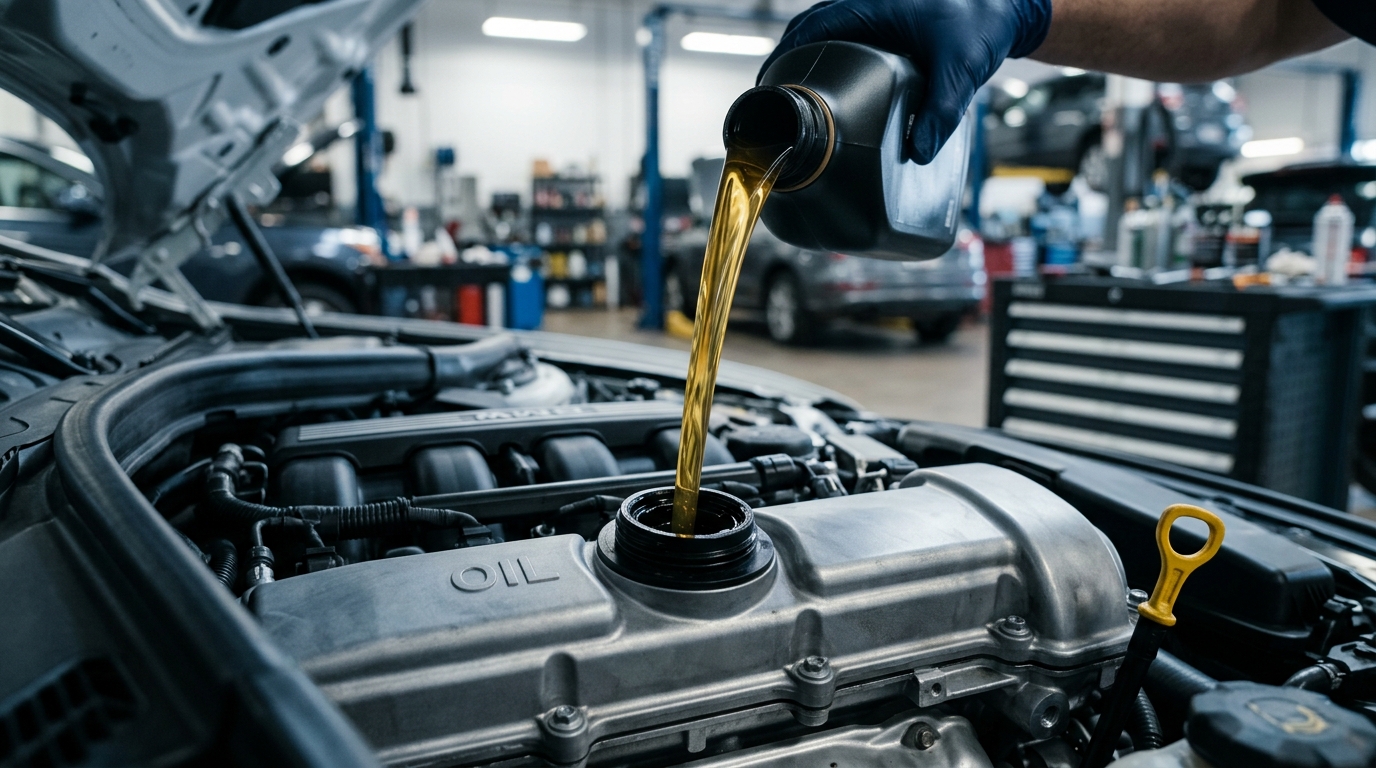
An $89.95 maintenance bundle covers up to five quarts of synthetic blend oil, a new Motorcraft oil filter replacement, rotation of all four tires, and a thorough multi-point vehicle inspection. This essential package checks vital fluid levels, battery condition, brake wear, and tire tread depth to keep your vehicle performing reliably and help prevent costly mechanical repairs down the road.
Regular vehicle maintenance protects your automotive investment and keeps your engine running efficiently through everyday driving conditions. By combining three core preventive services into a single appointment, this comprehensive service deal delivers exceptional value while addressing the most critical maintenance needs of modern cars, trucks, and SUVs.
During the oil change portion of the service, certified technicians drain the degraded engine oil and replace it with high-grade lubricant engineered to protect internal engine components against heat, friction, and sludge buildup. Up to five quarts of synthetic blend oil are included in the base package price, which satisfies the fluid capacity requirements for most four-cylinder and six-cylinder engines.
The tire rotation service moves each wheel to a different position on the vehicle according to manufacturer guidelines. Front and rear tires experience distinct wearing forces caused by steering inputs, weight distribution, and drivetrain forces. Rotating your tires systematically promotes uniform tread wear, extends overall tire lifespan, and helps preserve balanced handling characteristics.
The multi-point inspection rounds out the package by giving you a clear window into your vehicle's overall health. Technicians inspect high-wear components, check under-hood fluid levels, and examine safety systems to identify emerging issues before they turn into unexpected breakdowns.
For drivers navigating local farming routes or unpaved rural back roads near the Savannah River basin around Waynesboro, routine inspections and fresh filters prevent dust and grit from compromising critical engine components. To experience this comprehensive care, stop by our service center location on US Highway 25 or give our service advisors a call to check availability.
Table of Contents
- Does the $89.95 Price Include a New Oil Filter and Essential Fluids?
- Is Wheel Balancing Included with Your Tire Rotation?
- What Points Are Checked During the Vehicle Inspection and Battery Test?
- Are There Extra Costs Like Shop Supplies or Environmental Charges?
- Should You Service at a Ford Dealership or an Independent Shop?
- Do You Need an Appointment and Does Age Matter for Low-Mileage Vehicles?
- Common Questions About the $89.95 Service Package
- Keep Your Vehicle Running Strong with Certified Ford Maintenance
Does the $89.95 Price Include a New Oil Filter and Essential Fluids?
Yes, the $89.95 package price includes a brand-new original equipment oil filter and a full check and top-off of essential under-hood fluids alongside fresh engine oil. Standard service covers up to five quarts of synthetic blend oil and a high-efficiency filter, though larger engines requiring additional quarts or specialized full synthetic oil incur an extra charge.
Replacing the oil filter during every oil change is critical to maintaining clean oil circulation throughout the engine. Engine oil filters trap microscopic metal particles, soot, and road debris carried away by the circulating oil. Installing fresh oil without replacing the filter leaves contaminants trapped inside the housing, which quickly degrades the quality and protective qualities of the fresh oil.
The package includes an original equipment filter designed specifically for your engine's bypass pressure ratings and filtration specifications. These filters feature anti-drain-back valves that prevent oil from draining out of the filter when the engine is turned off, ensuring instant oil pressure upon cold startup.
In addition to replacing the engine oil and filter, technicians review and top off vital vehicle fluids, including:
- Windshield washer fluid to maintain clear visibility in all weather conditions
- Engine coolant and antifreeze in the overflow reservoir to protect against overheating
- Power steering fluid to support smooth steering response on equipped models
- Brake fluid level checks in the master cylinder reservoir to ensure proper hydraulic operation
Vehicles equipped with larger displacement engines—such as heavy-duty V8 engines found in F-Series trucks—often require six to eight quarts of oil. Extra oil quarts above the standard five-quart allowance are billed at a standard per-quart rate. If your vehicle requires full synthetic oil or specialized viscosity grades, our team transparently explains any price adjustment prior to starting work.
Protect your vehicle's engine performance by scheduling your service appointment online today. You can also contact our Ford parts department to learn more about OEM filters and fluid specifications.
Is Wheel Balancing Included with Your Tire Rotation?
No, standard wheel balancing is not included in a basic $89.95 tire rotation and inspection bundle. Tire rotation involves dismounting the wheel assemblies from the hubs and remounting them in a specific pattern, whereas wheel balancing is a separate mechanical service that requires specialized dynamic balancing equipment and counterweights.
Understanding the difference between tire rotation and wheel balancing helps vehicle owners make informed maintenance decisions:
- Tire Rotation: Changes the physical location of each tire on the vehicle (such as moving front tires to the rear) to equalize tread wear across all four tires over time.
- Wheel Balancing: Measures weight imbalances in the tire and wheel assembly as it spins, adding small clip-on or adhesive weights to eliminate high-speed vibrations and uneven tire wear.
When tires are rotated, technicians swap wheel positions based on whether the vehicle uses front-wheel drive, rear-wheel drive, or all-wheel drive configurations. Directional tire designs are swapped front-to-back on the same side, while non-directional tires are rotated in a cross pattern to maximize tread life.
Wheel balancing becomes necessary if you experience steering wheel vibration, floorboard shaking at highway speeds, or unusual cupping wear on the tire tread. While balancing is an optional add-on during a rotation service, combining both maintenance items ensures maximum ride comfort and prevents premature wear on suspension components like struts, shocks, and ball joints.
Checking tire inflation pressure is always performed during a standard tire rotation. Technicians adjust air pressure in all four tires—plus the spare—to match the manufacturer cold inflation specifications listed on the driver side door jamb placard.
What Points Are Checked During the Vehicle Inspection and Battery Test?
A multi-point vehicle inspection provides a thorough visual and mechanical evaluation of your vehicle's safety, steering, and braking systems, including a digital battery performance check. Technicians systematically review major components using a standardized color-coded reporting system to highlight items in good condition, areas needing future attention, and urgent safety concerns.
The comprehensive vehicle inspection evaluates critical operating systems through a detailed checklist:
- Brake System Assessment: Measuring inner and outer brake pad thickness, checking brake rotor condition, inspecting hydraulic lines for leaks, and evaluating parking brake performance.
- Tire Health and Tread Depth: Measuring tread depth in 32nds of an inch across the inside, center, and outer tread grooves to identify alignment issues or irregular wear patterns.
- Under-Hood Belts and Hoses: Examining serpentine belts for cracking or fraying, checking radiator and heater hoses for soft spots or leaks, and inspecting tensioners.
- Steering and Suspension: Checking shock absorbers, struts, tie rod ends, sway bar links, and steering rack boots for excessive play, damage, or leaking fluid.
- Exterior and Safety Lighting: Verifying operation of headlights, high beams, brake lights, turn signals, reverse lights, and windshield wiper blade condition.
The battery test is a vital component of the multi-point inspection process. Technicians use a specialized digital battery tester to measure cold cranking amps and battery conductance, which measures the battery's ability to hold and deliver electrical charge under load.
A comprehensive battery test includes inspecting battery terminals for corrosion, checking cable connections for tightness, and testing the alternator's charging output voltage. Catching a weak 12-volt battery during routine service prevents unexpected no-start situations at home or in parking lots.
Are There Extra Costs Like Shop Supplies or Environmental Charges?
Most standard automotive service invoices include minor shop supply fees and environmental disposal charges beyond the base $89.95 service rate. These routine line items account for specialized hazardous waste handling, eco-friendly fluid recycling, and shop consumables used during your vehicle's maintenance visit.
Understanding invoice fees provides complete clarity when reviewing your final service summary:
- Environmental Disposal Fees: Covers the safe collection, transport, and eco-friendly recycling of used engine oil, spent oil filters, and hazardous automotive waste in compliance with state and federal environmental protection regulations.
- Shop Supply Charges: Covers non-itemized materials consumed during vehicle service, including brake cleaner solvents, penetrating lubricants, shop towels, floor protective covers, and grease fittings.
Environmental fees typically range from $2 to $5, while shop supply fees are generally calculated as a small percentage of labor or total package cost, usually adding $3 to $10 to the invoice. Reputable service centers clearly itemize these state-mandated disposal fees and shop expenses on your work order so there are no surprises when paying your bill.
Other optional expenses that might arise during service depend on your vehicle's specific design requirements. For example, engines requiring more than five quarts of oil, vehicles needing full synthetic oil blends, or specialized locking lug nut removal tools may involve modest extra costs. Service advisors communicate any required price variations before technicians proceed with additional work.
Should You Service at a Ford Dealership or an Independent Shop?
Servicing your vehicle at a Ford dealership provides specialized factory-trained technicians, advanced diagnostic equipment, and genuine Motorcraft parts engineered specifically for your vehicle. While independent repair shops offer basic oil changes, dealership service centers specialize in manufacturer-backed care that preserves factory warranty protections and maintains official vehicle maintenance records.
Comparing the service experience between a franchise dealership and an independent shop highlights key differences:
- Technician Expertise: Dealership technicians complete rigorous manufacturer training modules and work on specific vehicle models daily, allowing them to diagnose complex mechanical issues quickly and accurately.
- Original Equipment Parts: Dealerships install genuine OEM parts and Motorcraft fluids designed to exact factory tolerances, backed by a comprehensive two-year unlimited-mileage warranty that covers both parts and labor.
- Specialized Diagnostic Tools: Dealership bays utilize proprietary computer diagnostic hardware and software designed to read manufacturer trouble codes, perform module updates, and reset oil life monitoring systems correctly.
- Warranty and Recall Integration: Dealership systems automatically check for open safety recalls, customer satisfaction programs, and technical service bulletins during routine maintenance visits, performing eligible warranty repairs free of charge.
For commuters traveling daily along the busy highway corridors into Augusta, having factory-certified technicians inspect brake systems and suspension components provides valuable peace of mind for high-mileage driving.
Dealership service departments also record every completed maintenance procedure directly into the official manufacturer central database. A complete, verified dealership service history enhances vehicle resale value and proves proper vehicle care if warranty coverage claims ever arise.
Do You Need an Appointment and Does Age Matter for Low-Mileage Vehicles?
While appointments are recommended to minimize wait times, walk-ins are accommodated based on daily bay availability, and engine oil must be changed at least once per year regardless of low mileage. Engine oil breaks down over time due to ambient moisture buildup and chemical oxidation, making annual service essential even for vehicles driven only short distances.
Our service advisors frequently observe that while quick express lanes can handle basic fluid drops, booking a scheduled appointment for an $89.95 bundled package guarantees dedicated bay time for a thorough multi-point inspection. Reserving your appointment online ensures technicians are prepped with the correct filter and oil grade before you arrive.
Time-based oil degradation is an important concept for low-mileage drivers to understand:
- Moisture and Condensation: Short trips prevent the engine from reaching full operating temperature, allowing water vapor to accumulate in the oil pan rather than evaporating off.
- Fuel Dilution: Unburned fuel can wash down cylinder walls during cold starts, mixing with the engine oil and reducing its lubricating effectiveness.
- Chemical Breakdown: Engine oil additives degrade over time through exposure to oxygen and combustion byproducts, even when the vehicle sits parked in a garage.
Modern vehicles equipped with an Intelligent Oil-Life Monitor evaluate engine operating temperatures, idle time, trip duration, and ambient climate to calculate oil breakdown. The system alerts drivers when service is due, but manufacturers recommend changing the oil at least once every 12 months if the monitor notification does not illuminate sooner.
When planning your next maintenance visit, consider finding our Waynesboro facility along US Highway 25 or contacting our service team to select a convenient appointment time.
Common Questions About the $89.95 Service Package
Q: How long does the $89.95 oil change, tire rotation, and inspection service typically take?
Standard completion time for a combined oil change, tire rotation, and multi-point vehicle inspection ranges between 45 and 60 minutes when scheduled in advance. Service duration depends on current shop volume, vehicle engine configuration, and whether additional maintenance concerns are identified during the inspection process. Our comfortable customer lounge offers complimentary Wi-Fi and workspace accommodations while your vehicle is in the service bay.
Q: What happens if my truck or SUV requires more than five quarts of oil?
The base $89.95 service deal includes up to five quarts of synthetic blend engine oil, which covers standard sedan and crossover engines. If your vehicle features a larger engine—such as a V8 engine in a full-size truck or SUV—that requires six, seven, or eight quarts, additional quarts are billed at a standard per-quart rate. Your service advisor will confirm fluid capacities and explain any small cost adjustments before service begins.
Q: Can I use the $89.95 package rate for full synthetic engine oil instead of synthetic blend?
The standard $89.95 package price covers high-quality synthetic blend oil, which meets or exceeds standard manufacturer specifications for most vehicles. If your vehicle requires full synthetic oil or if you prefer the enhanced thermal protection of full synthetic oil for heavy towing, an upgrade option is available for a modest price difference reflecting the higher fluid cost.
Q: How often should I schedule this combined maintenance package for my vehicle?
Most manufacturers recommend rotating tires and changing engine oil every 7,500 to 10,000 miles or at least once per year, whichever comes first. Following your vehicle's Intelligent Oil-Life Monitor system or checking your Owner's Manual provides specific guidance tailored to your driving habits, towing frequency, and daily operating environment.
Q: What documentation or service records are provided after the multi-point inspection?
Upon service completion, you receive a detailed, color-coded multi-point inspection report that rates the condition of your brakes, tires, battery, fluids, belts, and safety systems. Green indicates good condition, yellow signifies components to monitor for future attention, and red alerts you to urgent service needs. Your completed service is also logged into official Ford digital maintenance records to protect your vehicle's history and warranty status.
Keep Your Vehicle Running Strong with Certified Ford Maintenance
Routine preventive maintenance is the most effective way to protect your vehicle's longevity, fuel efficiency, and safety. Combining an oil change, tire rotation, and multi-point inspection into a single convenient service visit ensures that every major vehicle system receives professional attention from factory-certified technicians using genuine Motorcraft parts.
Our service department is dedicated to providing transparent pricing, efficient scheduling, and dependable vehicle care tailored to your family's daily driving demands. Whether you need routine oil service or a seasonal vehicle checkup, our local team is here to help keep your vehicle running smoothly mile after mile.
Take the next step in caring for your vehicle by booking your service appointment online or calling our service department directly at Paul Thigpen Ford of Waynesboro today.
© 2026 Paul Thigpen Ford of Waynesboro. All rights reserved.